Restoration Masters
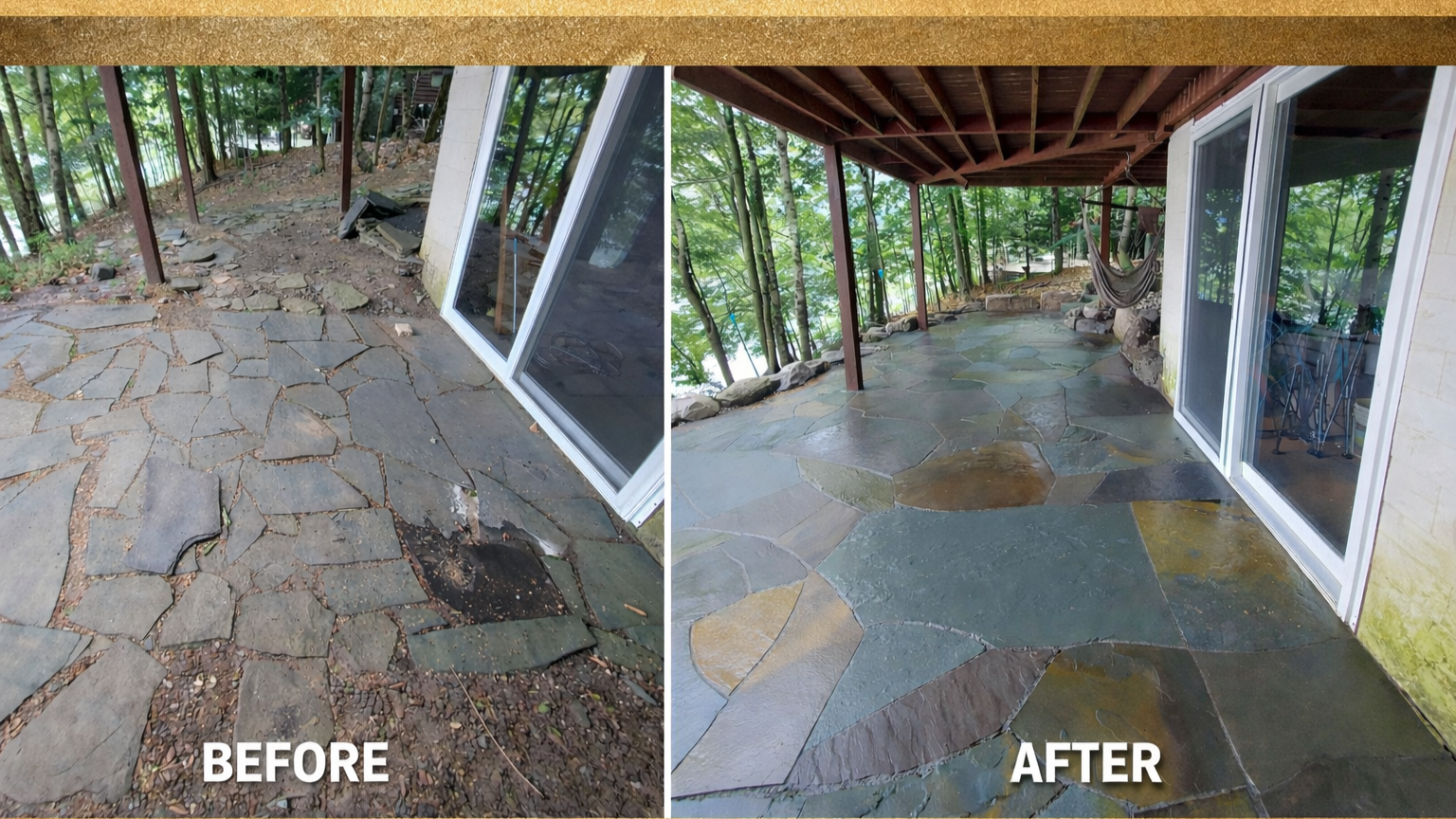
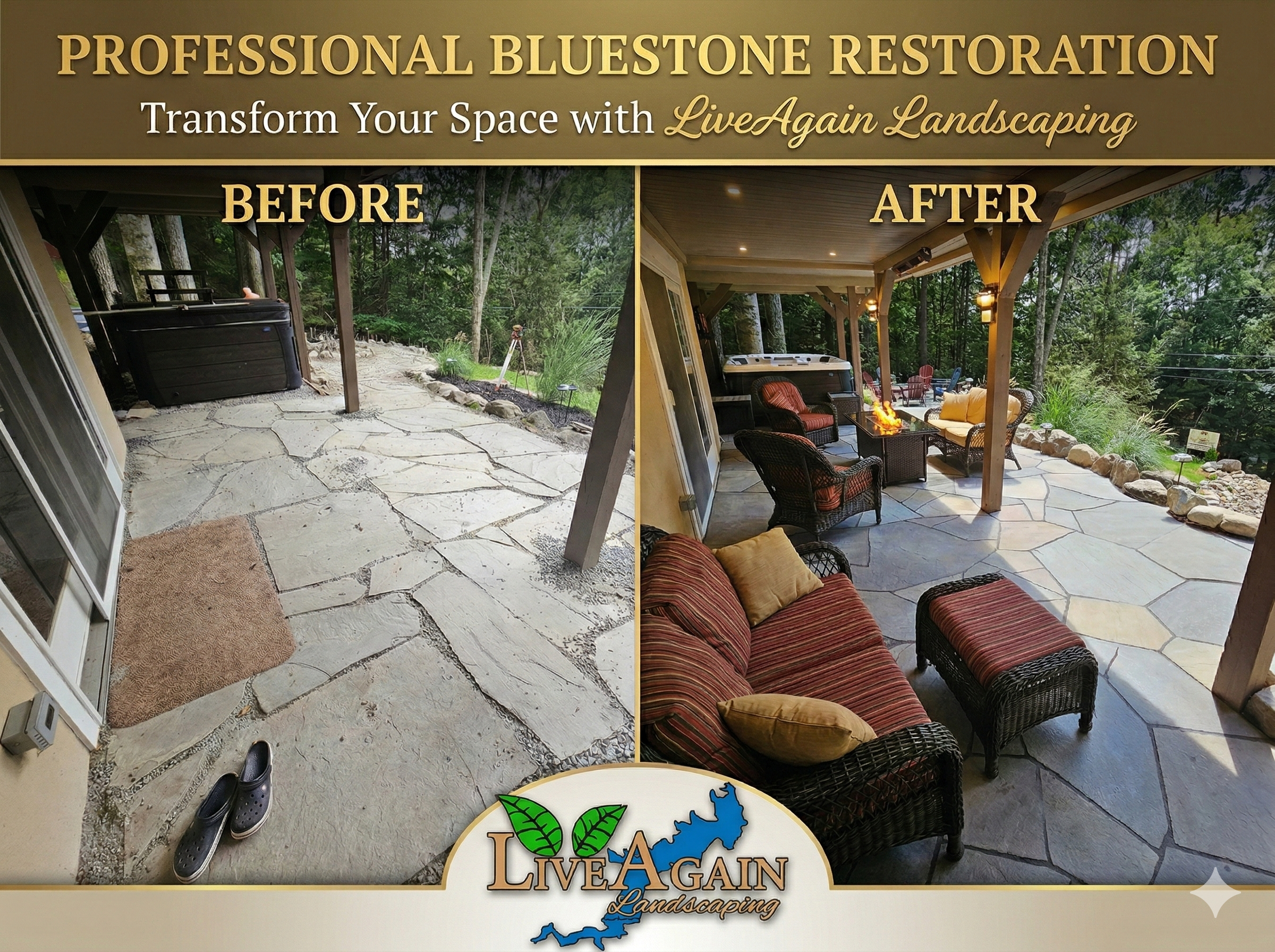
Drag the gold slider to see the Before & After this patio!

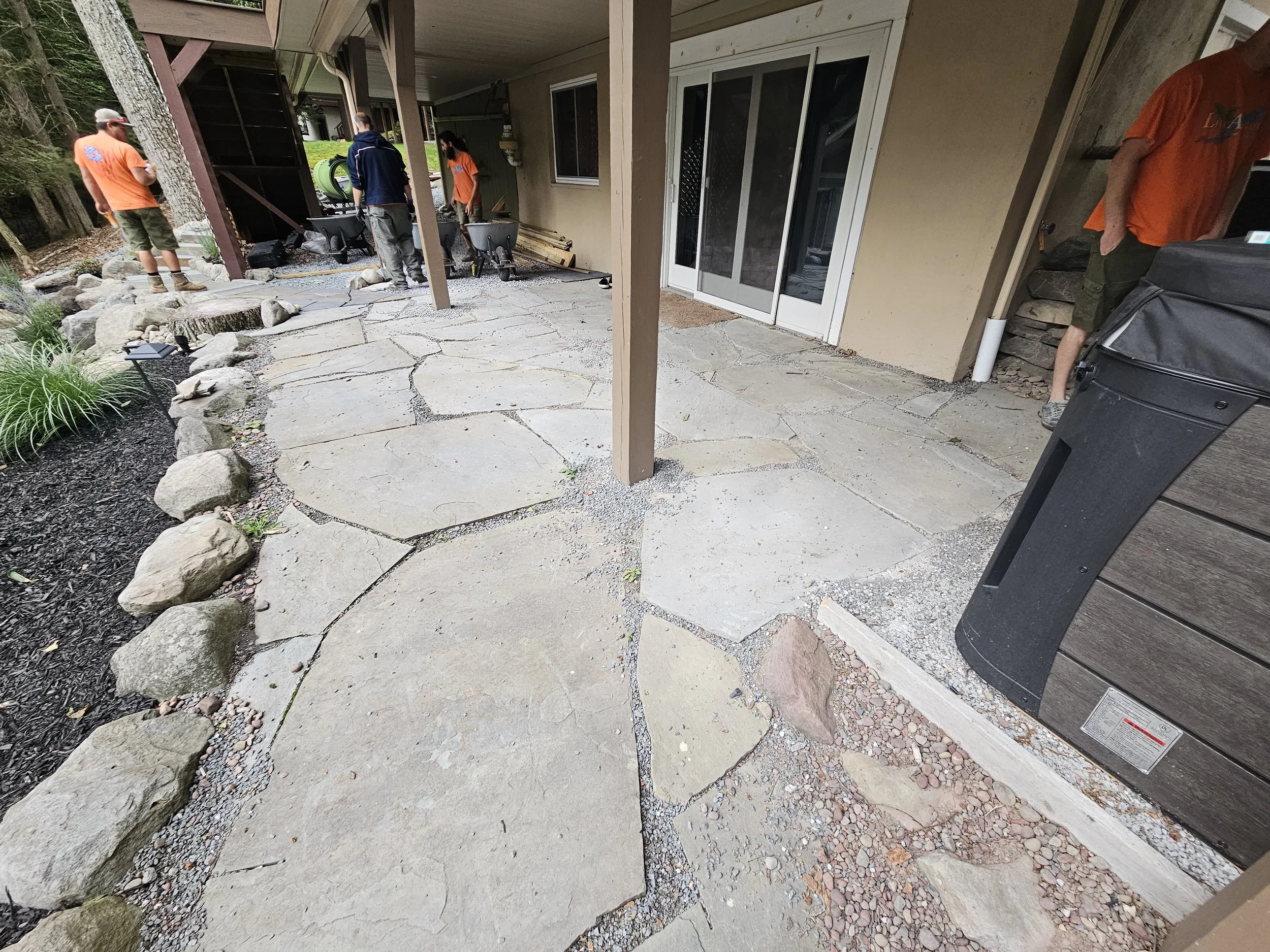
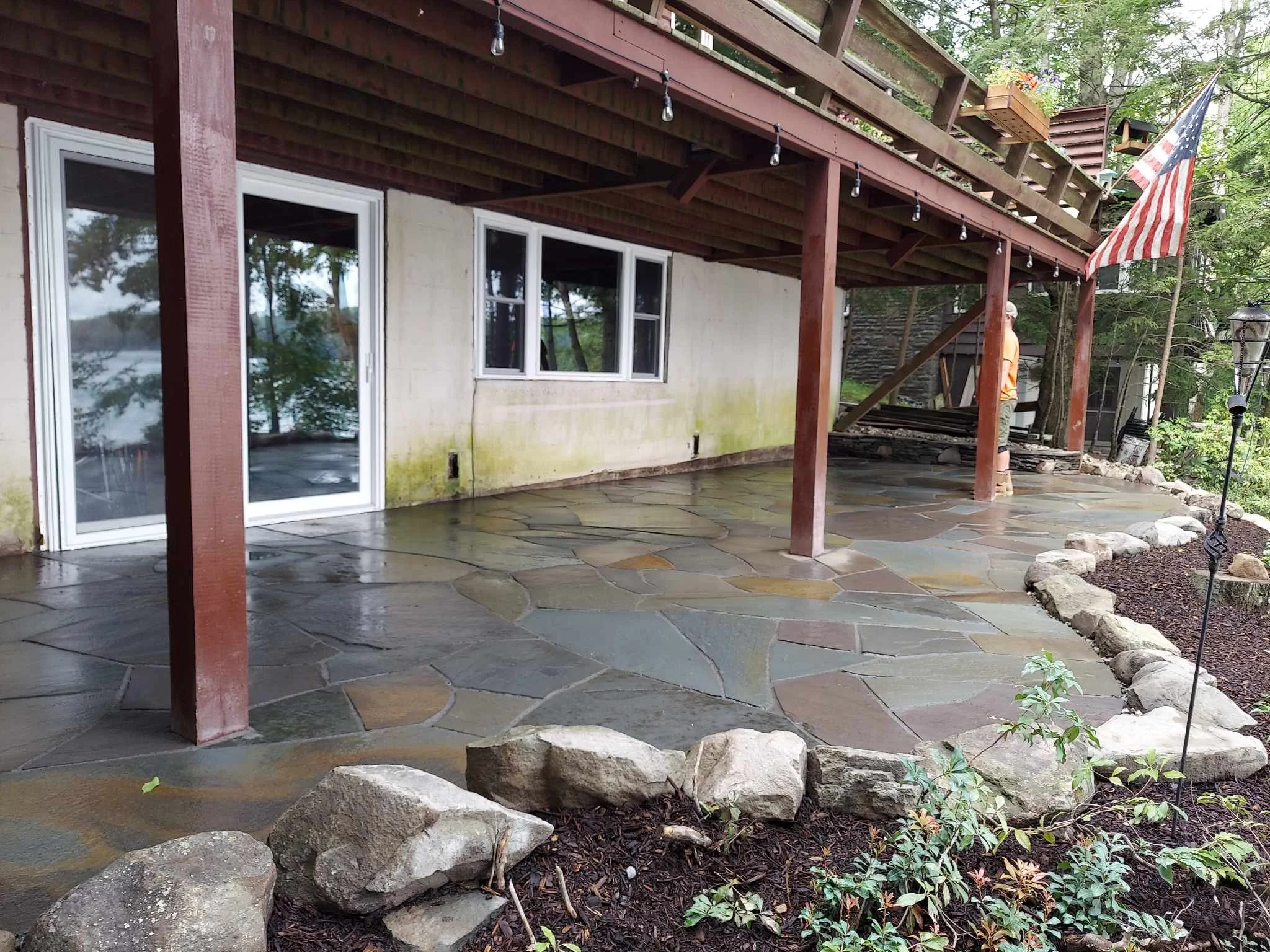
This patio was “professionally” installed in 2020 by a lake region competitor, and was replaced by our experts in 2023! This client could have saved $50,000 if the LiveAgain Restoration Team did the original installation with our 10 Year Warranty!
Competing Companies Patio FAILED in under 3 years!!!
Bluestone Restoration
Specialists
Driven by our passion for the beauty and nature of our area, that is naturally covered with Pennsylvania Bluestone. Our Restorations are done to the highest quality!
Bluestone Patio Restoration — From Uneven, Weed-Filled, Heaving Stone → Smooth, Level & Beautiful Again
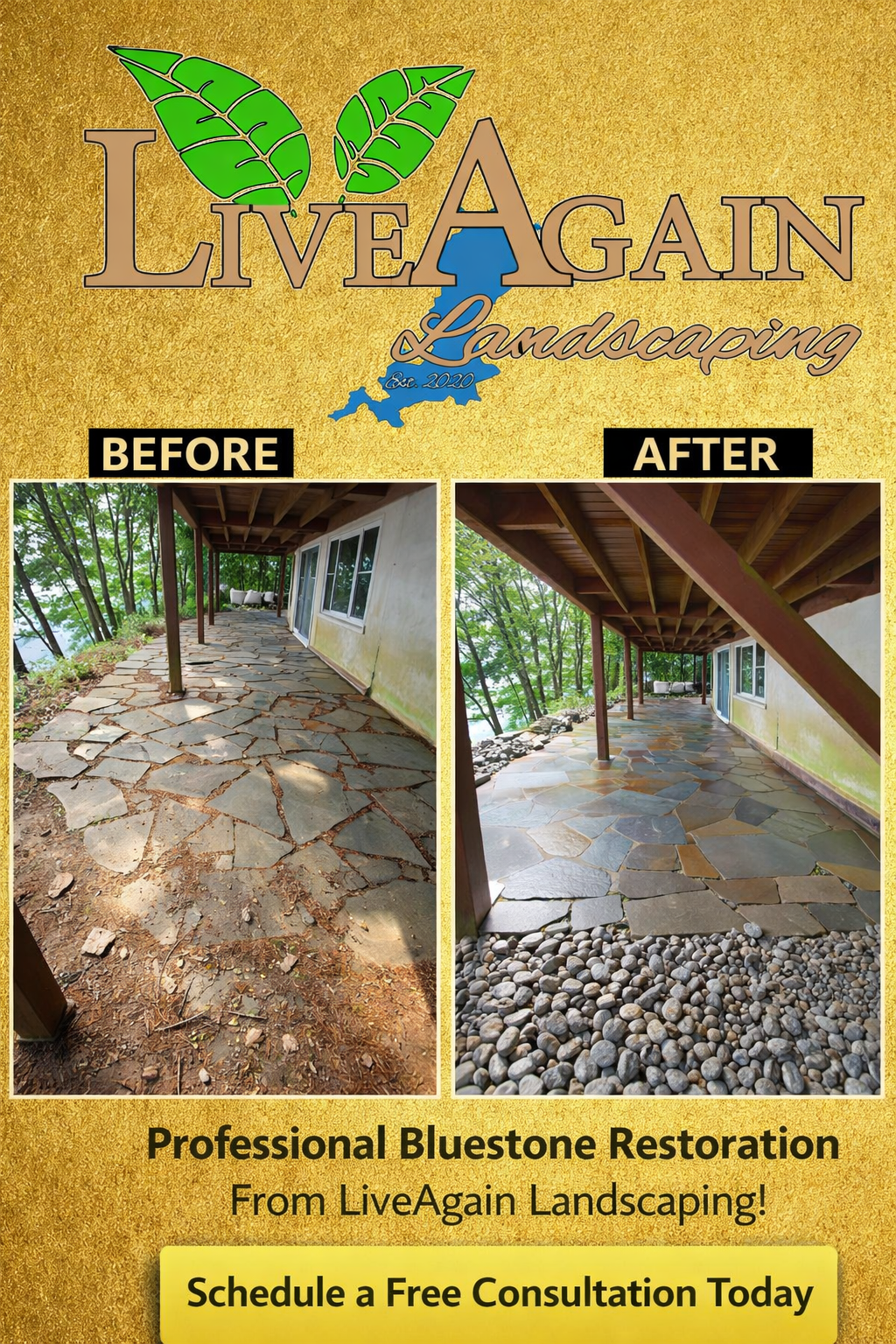
BEFORE
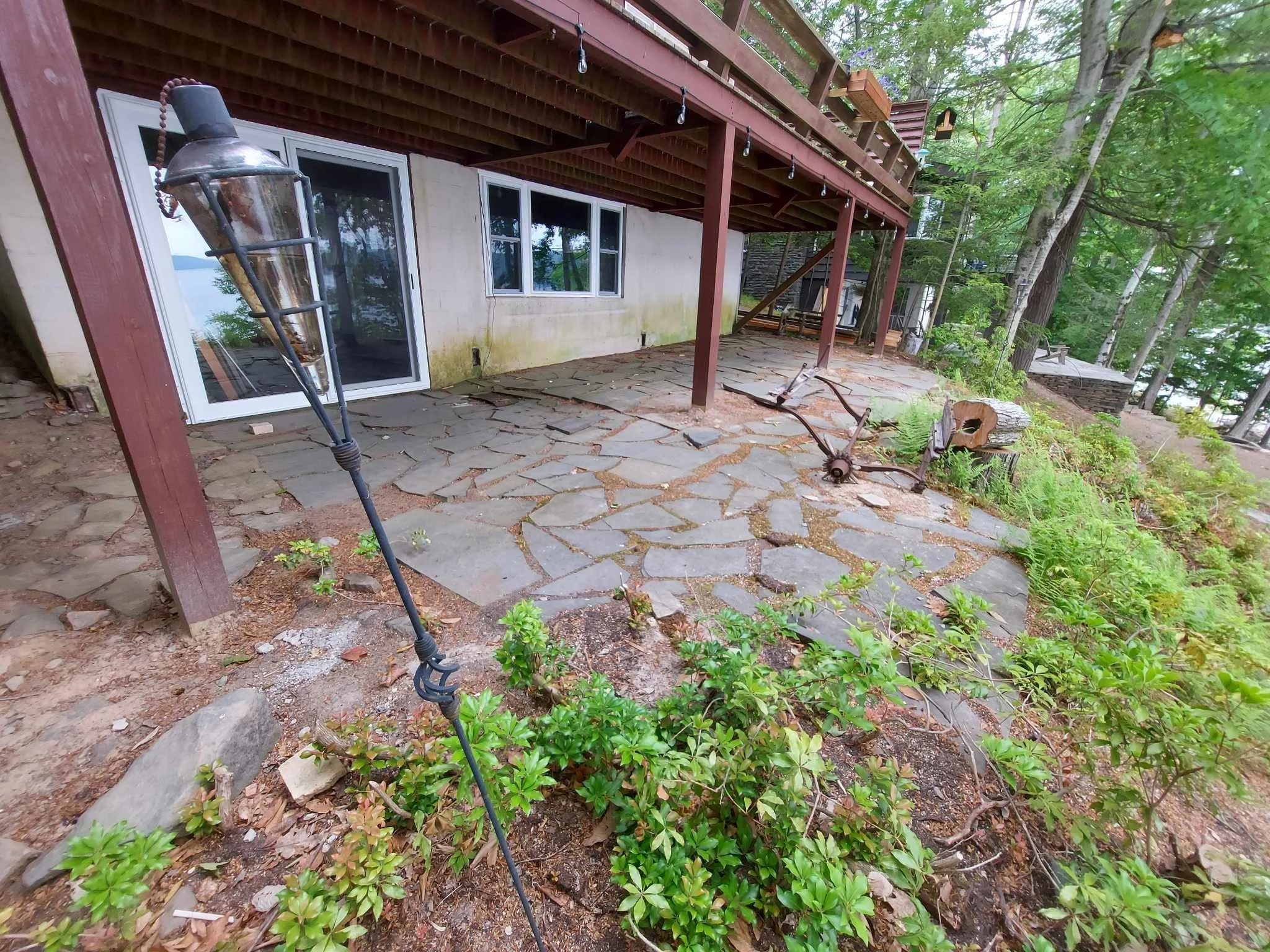
AFTER
What a difference !
Bluestone Restoration & Repair
A timeless material requires a technical approach. At LiveAgain Hardscape, we don't just patch problems—we solve the underlying issues to ensure your patio lasts for generations.
Bluestone is one of the most durable and beautiful materials available, but even the highest quality stone will fail if the installation below it is compromised. When we arrive to assess a failed or aging patio, we follow a rigorous inspection protocol to determine if the project requires a simple restoration or a structural intervention.
Our Assessment Protocol
1. The Foundation: Subgrade & Base Analysis
The number one cause of patio failure is the base. We start by looking for settling, heaving,
or soft spots that indicate unstable soil or inadequate compaction.
Depth Verification: We confirm the depth of the existing base. While the industry
standard is often 4–6 inches, we install 9-inch open-graded bases.
The "Sand Trap": 95% of the failed patios we inspect were built on a base that includes
sand. In our region of Pennsylvania, sand holds moisture, attracts ants, and allows frost
to heave the stones in winter.
If we find a sand-based system, we almost always recommend a full replacement.
2. Drainage & Water Management
Water is the enemy of hardscaping. If water is pooling on your patio or running toward your foundation, the restoration must address the grade.
Slope Check: We verify a minimum slope of 1/8"–1/4" per foot away from structures.
Downspouts: We inspect downspout management. Improperly placed downspouts are a leading cause of basement water issues and base washout.
3. Material Inspection
Bluestone installation is an art form, and the condition of the stone dictates our approach.
Stone Quality: We inspect for brittle fractures, deep cracks, or flaking.
Stability: We check for "rocking" stones. A stone that rocks or sounds hollow when tapped has a void beneath it, which will eventually lead to breakage.
Uniformity: We ensure the stones meet thickness guidelines to prevent tripping hazards.
4. Structural Integrity & Edging
A patio is only as strong as its edges. If the perimeter moves, the center will separate.
Edge Restraints: We look for rigid containment. We prefer using large boulders or concrete edge restraints to lock the design in place.
Transitions: We inspect how the patio meets steps, driveways, and lawns to ensure smooth, safe transitions that eliminate trip hazards.
5. Jointing & Pointing
The joints are often the first element to visually fail, allowing weeds to take over.
Joint Analysis: We look for consistent joint widths (aiming for 1/2" where possible). Long, running joints prevent the paving from interlocking and increase the chance of failure.
Material Match: We determine if the existing joint material (mortar vs. polymeric sand) is suitable for the base it sits on.
Historical Preservation
Restoring the past without erasing it.
For historical properties, our approach shifts from "replacement" to "preservation." We understand that the patina and character of an old installation are irreplaceable. In these instances, we carefully lift, repair, and reset only the failed areas, blending our work seamlessly to leave the surrounding stonework undisturbed.
Is Your Bluestone Starting to Fade or Shift?
Why Most Bluestone Fails:
Most bluestone installations fail due to a combination of poor drainage and improper winter care. When stones are set on a non-porous base, trapped moisture undergoes a "freeze-thaw" cycle that causes the earth to heave and the stones to shift or crack. This damage is often accelerated by the use of traditional rock salt, which penetrates the natural layers of the sedimentary rock and causes "spalling," where the surface begins to flake and peel. Ultimately, without a properly pitched sub-base of crushed stone and the use of stone-safe de-icers, even the highest quality Pennsylvania bluestone will succumb to water retention, weed intrusion, and structural delamination within just a few seasons.
With our expert techniques, timeless designs, and industry leading warranty….
It’s The LiveAgain Diffence
5-Star review from an actual restoration client on Lake Wallenpaupack-
“There are not enough stars available to give Frank, Pete and the team! The are true craftsman and dare I say artists! The transformation to our backyard is nothing short of spectacular. These guys show up when they say and put in an honest days work. They are neat and clean and pay close attention to the littlest details. We loved chatting with them each morning and our pups loved them too. The whole team works so well together- we enjoyed hearing them banter back and forth with each other - you know they like each other. I can’t thank them enough for all they did. Exceeded expectations 100%” Agnes - Lake Wallenpaupack